
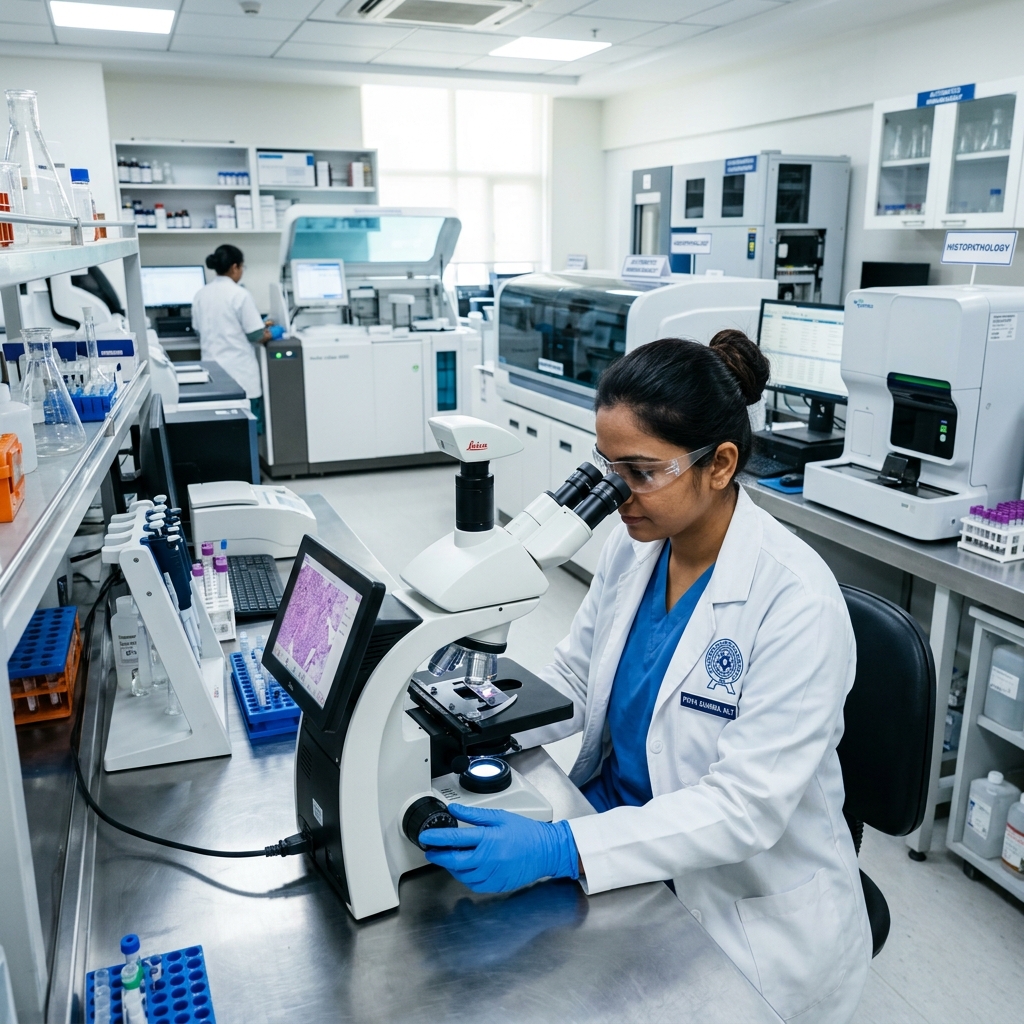
Medical Lab Technology: The Hidden Backbone of Modern Healthcare
Every time a doctor diagnoses a disease, monitors a patient's recovery, or decides on the right treatment, there is one profession working silently behind the scenes—Medical Lab Technology (MLT).
From a simple blood test to advanced molecular diagnostics, Medical Laboratory Technologists play a vital role in ensuring accurate and timely healthcare. In fact, nearly 70% of medical decisions are influenced by laboratory test results, making Medical Lab Technology one of the most essential professions in the healthcare industry.
What is Medical Lab Technology?
Medical Lab Technology is a branch of healthcare that involves the collection, testing, analysis, and interpretation of biological samples such as blood, urine, saliva, tissues, and other body fluids.
Medical Laboratory Technologists work with sophisticated laboratory instruments to help physicians diagnose diseases, monitor treatment, and prevent health complications.
Their work forms the foundation of evidence-based medical care.
Why Medical Lab Technology is Important
Without laboratory investigations, diagnosing many diseases would be nearly impossible. Medical Laboratory Technologists help in:
- Detecting infections
- Diagnosing diabetes
- Identifying blood disorders
- Detecting cancers
- Monitoring kidney and liver diseases
- Blood grouping and transfusion services
- Hormonal investigations
- Genetic and molecular testing
- COVID-19 and other infectious disease testing
Doctors rely on laboratory reports before prescribing medicines or planning surgeries.
Areas of Specialization
Medical Lab Technology offers exposure to several specialized departments, including:
- Clinical Biochemistry: Analyzing blood sugar, cholesterol, kidney function, liver function, and hormones.
- Hematology: Study of blood cells, anemia, leukemia, clotting disorders, and blood cancers.
- Microbiology: Identification of bacteria, viruses, fungi, and parasites responsible for infections.
- Histopathology: Microscopic examination of tissues to diagnose cancers and other diseases.
- Cytology: Study of individual cells for early detection of cancer.
- Blood Bank Technology: Blood grouping, cross-matching, component preparation, and transfusion safety.
- Molecular Diagnostics: PCR, DNA testing, and advanced diagnostic techniques.
Skills Required
A successful Medical Laboratory Technologist should possess:
- Scientific temperament
- Attention to detail
- Accuracy
- Analytical thinking
- Computer proficiency
- Laboratory safety practices
- Teamwork
- Communication skills
- Ethical responsibility
Career Opportunities
Medical Lab Technology offers excellent employment opportunities in both public and private sectors. Graduates can work in:
- Government hospitals
- Private hospitals
- Diagnostic laboratories
- Medical colleges
- Blood banks
- Research laboratories
- Pharmaceutical companies
- Biotechnology companies
- Public health laboratories
- IVF laboratories
- Forensic laboratories
- Health insurance companies
Many professionals also establish their own diagnostic laboratories after gaining experience and obtaining the required licenses.
Career Designations
Some popular job roles include:
- Medical Laboratory Technologist
- Laboratory Technician
- Laboratory Supervisor
- Blood Bank Technologist
- Microbiology Technologist
- Histopathology Technologist
- Quality Control Officer
- Laboratory Manager
- Research Assistant
- Application Specialist (Medical Equipment)
Salary Prospects
The salary depends upon qualifications, skills, and experience. Typical salary ranges in India are:
| Experience | Average Monthly Salary |
|---|---|
| Fresher | ₹18,000–₹30,000 |
| 2–5 Years | ₹30,000–₹50,000 |
| 5–10 Years | ₹50,000–₹80,000 |
| Senior Professionals | ₹80,000–₹1,50,000+ |
Professionals with expertise in molecular diagnostics, quality management, and advanced laboratory automation often command higher salaries.
Future Scope
Healthcare is expanding rapidly due to:
- Rising population
- Increasing lifestyle diseases
- Growth in preventive healthcare
- Expansion of diagnostic centres
- Technological advancements
- Personalized medicine
- Artificial Intelligence in diagnostics
These developments are creating a growing demand for skilled Medical Laboratory Technologists across India and internationally.
Why Choose a B.Voc. in Medical Lab Technology?
A Bachelor of Vocation (B.Voc.) in Medical Lab Technology is designed to make students industry-ready through a blend of academic learning and practical training. Key benefits include:
- Skill-oriented curriculum
- Extensive hospital-based practical training
- Hands-on experience with modern laboratory equipment
- Industry-relevant competencies
- Improved employability
- Affordable professional education
- Multiple career pathways in diagnostics, hospitals, and research
Students gain real-world exposure that prepares them to contribute effectively from the very beginning of their careers.
Who Can Apply?
Students who have completed Class 12 (Science, Commerce, or Arts, as per institutional eligibility criteria) and have an interest in healthcare and laboratory sciences can consider Medical Lab Technology as a rewarding career option.
This field is particularly suitable for students seeking a professional healthcare career without pursuing an MBBS degree.
Conclusion
Medical Laboratory Technology is often called the "backbone of modern diagnosis." Behind every accurate diagnosis is a laboratory professional ensuring precision, reliability, and quality. If you enjoy science, technology, problem-solving, and contributing to patient care without being directly involved in clinical treatment, Medical Lab Technology offers a stable, respected, and rapidly growing career. As healthcare continues to evolve, the demand for skilled laboratory professionals will only increase, making Medical Lab Technology an excellent choice for students who aspire to build a meaningful and future-ready career in healthcare.
Get Certified in Allied Health & Paramedical Programs
Join Hayat Institute of Skills & Allied Health and build a rewarding career in healthcare through hands-on training and government-recognized courses.
Enroll Now